

In 2025, time management is not just about staying organized. For managers, it’s a critical skill that shapes how teams operate, perform, and grow. You’re not just managing tasks. You’re navigating shifting priorities, supporting your team, making space for strategic thinking, and trying to protect your own focus in the process.
According to a 2025 workplace survey, 56% of employees feel overwhelmed because of poor time management skills). That kind of overwhelm doesn’t stay isolated. When managers struggle to manage their time, their teams often fall into the same pattern; spending too much time reacting and not enough time moving forward.
This blog is about practical ways to shift that. We’ll break down time management techniques that help leaders regain control of their day, protect time for what matters, and lead their teams with more clarity and less chaos.
Key Takeaways
Time management for managers is about leading, not just doing. Your schedule should reflect both your priorities and your team’s progress, not just a list of tasks.
Calendar control is essential. Blocking time for deep work, planning, and decision-making helps avoid a day filled with only meetings and interruptions.
Weekly planning creates direction. A short weekly review helps managers stay aligned with goals, adjust priorities, and reduce time spent reacting.
Delegation is a leadership tool, not a shortcut. Handing off work with clarity frees up your time and builds team ownership.
Distraction management is part of the job. Creating boundaries around notifications, messages, and last-minute requests protects focus time.
Tools like Akiflow support structure without adding complexity. By combining your calendar and task list, Akiflow helps you stay on top of priorities in one place.
What Time Management Really Means for Leaders
Time management for managers isn’t about squeezing more tasks into the day. It’s about making deliberate choices that support your team’s goals and protect your ability to lead with focus.
Unlike individual contributors, managers deal with a mix of planned work and constant interruptions, such as quick check-ins, shifting priorities, and urgent decisions. You’re often pulled between helping others move forward and trying to make space for your own strategic work. That’s why traditional productivity advice doesn’t always fit.
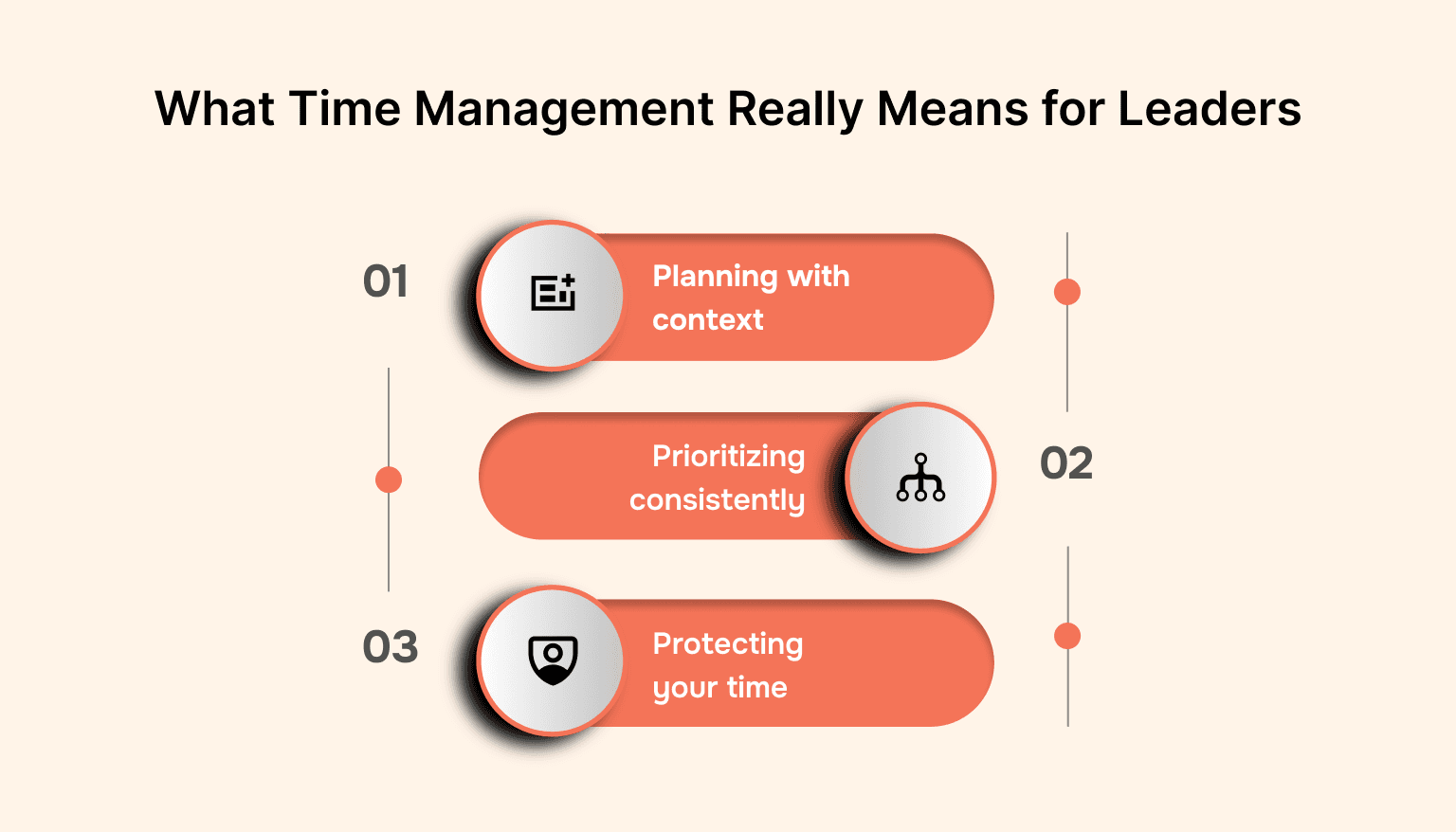
For leaders, effective time management means three things:
Planning with context. It’s not just about your to-do list, but understanding how your time impacts team momentum and outcomes.
Prioritizing consistently. You need a clear sense of what moves the needle today, this week, and across quarters, and the ability to adjust without losing direction.
Protecting your time. Not every meeting needs you. Not every fire is yours to put out. Knowing when to step in and when to create boundaries is part of the job.
Time is your most limited resource as a manager, and how you use it sets the tone for your entire team. The next sections will break down how to turn this into daily habits that actually stick.
Must read: 10 Strategies for Mastering Time Management
Core Principles for Managers
Before jumping into techniques, it helps to ground your time management in a few key principles. These aren’t productivity hacks. They’re foundational habits that help you manage both your own time and your team’s progress with less stress and more clarity.
1. Set Clear Goals That Guide Your Time
Your calendar should reflect what matters most. Without clear goals, it’s easy to spend your day reacting to emails, requests, and low-priority tasks. Set short-term and long-term goals that align with both your role and your team’s responsibilities. Then use those goals to guide how you allocate your time week by week.
Example: If one of your team goals is to reduce onboarding time for new hires, block time for reviewing documentation, talking to recent hires, or testing your onboarding flow. Treat it like any other priority, not an afterthought squeezed in between meetings.
2. Prioritize Work That Drives Impact
Not everything urgent is important. One of the most valuable time management skills for any leader is knowing what to say no to. Techniques like the Eisenhower Matrix or simple daily priority lists can help you identify which tasks create meaningful progress versus which ones only create motion.
Tip: Start your day by identifying one or two non-negotiable priorities. Finish those first, then move on to everything else.
3. Delegate With Clarity, Not Just to Offload
Delegation isn’t about pushing tasks onto others. It’s about giving your team ownership, reducing bottlenecks, and creating space for you to focus on high-leverage work. The key is to delegate with context. Share the “why,” not just the “what,” and make sure responsibilities are clearly defined.
Common mistake: Delegating a task without checking in on priorities or workload. Before handing something off, ask yourself if the timing is right and whether the person has what they need to do it well.
Practical Strategies That Work
Once the big-picture habits are in place, it’s time to build systems that actually hold up during a busy week. These strategies help you protect your time, reduce overload, and create a rhythm your team can count on.
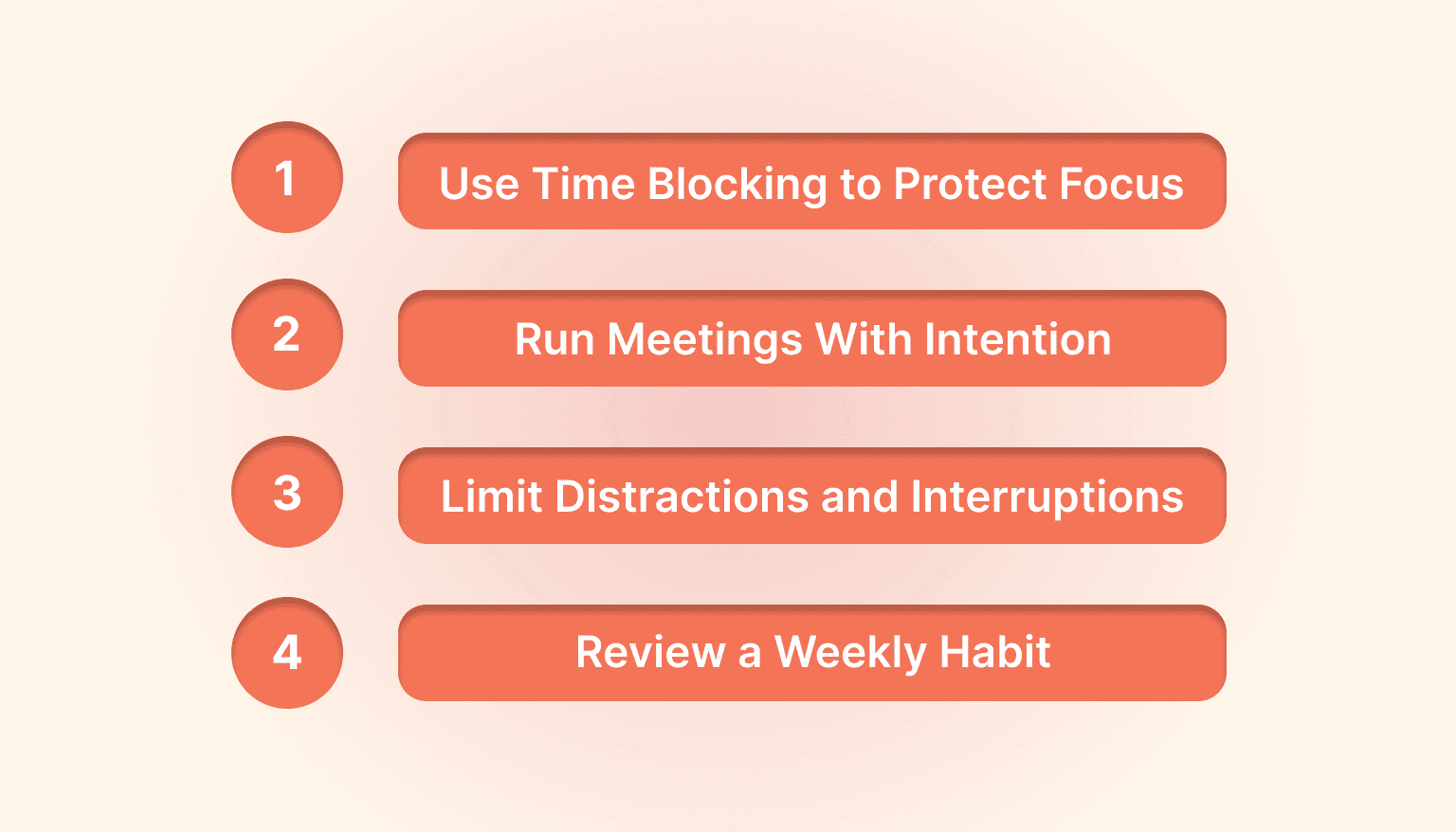
1. Use Time Blocking to Protect Focus
Meetings, quick asks, and Slack pings can easily fill your calendar before you even get to your real work. Time blocking helps you take back control by giving each task a defined place in your day.
Set aside specific blocks for deep work, admin, and team support. Even 90 minutes of protected focus time can make a huge difference. Treat those blocks like actual meetings with yourself, they only get moved when something more important truly needs that slot.
2. Run Meetings With Intention
Meetings aren’t always the problem. Poorly run meetings are. Make sure every meeting has a purpose, a defined agenda, and only the people who need to be there.
If a status update can happen asynchronously, let it. If a 30-minute meeting only needs 10, end it early. As a manager, model what a good meeting looks like and others will follow.
3. Limit Distractions and Interruptions
You won’t eliminate distractions, but you can create boundaries around them. Silence notifications during focus blocks. Batch email responses instead of checking your inbox on autopilot. Let your team know when you’re in focus mode so they don’t expect an instant reply.
Small shift, big win: Pick one or two times a day to check communication tools and stick to that. You’ll still be responsive, but not reactive.
4. Make Planning and Review a Weekly Habit
Without regular planning, your calendar fills up with whatever’s loudest, not what’s most important. Use the end of each week to review what went well, what didn’t get done, and what deserves time next week. Then block space for those priorities before anything else creeps in.
Even 15 minutes on Friday or Monday can give your week more direction and less friction.
Also read: Time Management Plan: 6 Strategies To Improve Productivity
Time Management Tools and Techniques
You don’t need dozens of tools to manage your time well. In fact, too many tools often create more friction. The goal is to use systems that help you stay focused, prioritize with clarity, and make smart decisions about how to spend your day.
Here are a few that work especially well for managers:
1. Calendar-Based Planning: Your calendar should reflect your priorities, not just your availability. Treat it as a central hub for planning the week ahead, blocking focus time, and scheduling recurring tasks. Many high-performing managers review their calendar every Friday or Sunday to get ahead of the coming week.
2. Task Capturing That’s Instant and Centralized: Keep one trusted place to capture tasks. Whether it’s from meetings, emails, Slack messages, or random thoughts during the day, it should all go into one system. This helps you avoid scattered to-do lists and makes it easier to review and prioritize daily.
3. Priority Frameworks: Frameworks like the Eisenhower Matrix, daily top 3 lists, or the 80/20 rule are useful for staying clear on what deserves your attention. Use them during weekly planning sessions or anytime your to-do list feels out of control.
4. Focus and Distraction Control: Tools like website blockers, notification managers, and calendar integrations can help reduce distractions. But the real value comes from creating time blocks where your environment supports focus. Set up your workspace to reduce noise, and close apps that don’t need to be open.
Common Time Management Pitfalls for Team Leaders
Even with good intentions, it’s easy for managers to fall into time traps. Here are some of the most common patterns that quietly drain your focus and reduce your team’s effectiveness.
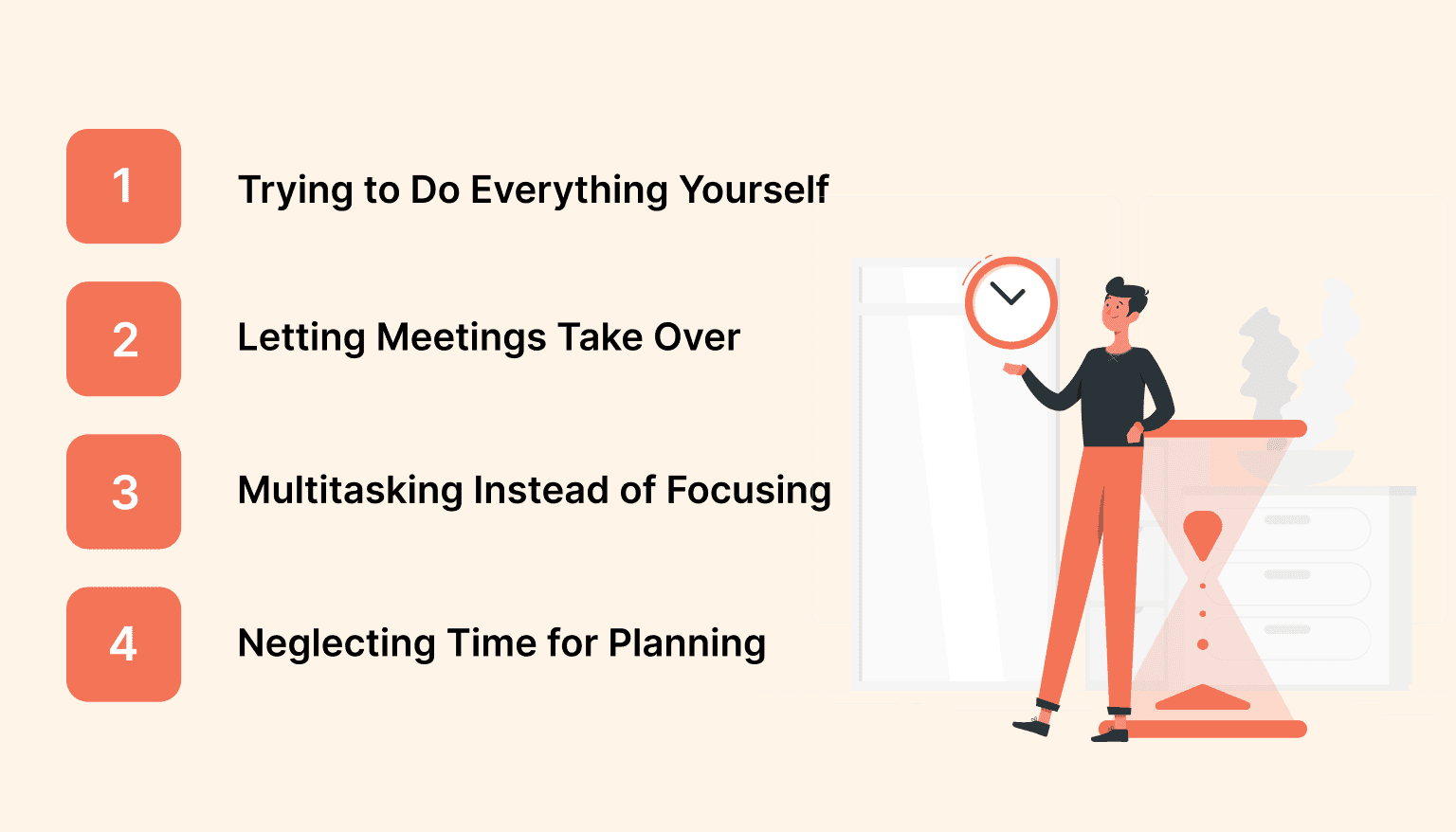
1. Trying to Do Everything Yourself: It might feel faster to just handle something quickly rather than explain it, but over time this builds dependency and overload. Delegation takes upfront effort, but it’s the only way to free up time for high-level work and develop your team’s skills.
2. Letting Meetings Take Over: Without strong boundaries, your calendar can quickly turn into a wall of back-to-back meetings. This leaves no space for deep thinking or strategic planning. Make it a habit to audit your meetings regularly, decline what doesn’t require your input, and leave open time blocks where possible.
3. Multitasking Instead of Focusing: Switching between tasks reduces performance, even if it feels productive in the moment. For managers, constant context switching can lead to decision fatigue and overlooked details. Focus on one task at a time, especially when dealing with high-stakes decisions or team communication.
4. Neglecting Time for Planning and Reflection: When things get busy, planning is often the first thing to go. But skipping this step leads to reactive weeks that lack direction. Build in weekly time to reflect, adjust priorities, and set up your calendar with intention.
Suggested read: The Science of Blocking Time: A Smarter Way to Work
Real-World Manager Scenarios and What to Do
Time management advice is useful, but it sticks best when you can see how it works in practice. Below are a few common situations managers face and simple ways to handle them more effectively.
Scenario 1: Your Day Is Wall-to-Wall Meetings
You look at your calendar and realize you have no time left to actually do your work. By the end of the day, your task list hasn’t moved, and the pressure just rolls over to tomorrow.
What to do: Start by blocking one or two meeting-free hours per day. Protect that time for thinking, planning, or handling complex tasks. Review your calendar weekly to see which meetings could be shortened, delegated, combined, or removed entirely.
Scenario 2: Your Inbox Dictates Your Day
You open your laptop to check one email and end up losing 90 minutes to replies, notifications, and follow-ups.
What to do: Set two or three windows during the day to check and respond to emails or messages. Outside of those times, close the tab or silence notifications. This gives you space to focus without falling behind on communication.
Scenario 3: You’re Stuck in Reactive Mode
Your team constantly asks for your input, and you feel like you’re solving problems all day instead of making progress on bigger goals.
What to do: Create clearer boundaries around when you’re available for questions and when you need focus time. Train your team to bring questions to standups or designated check-ins, and encourage them to try solving problems before asking you.
Scenario 4: You’re Always Behind on Planning
Each week starts with good intentions, but by Tuesday you’re already off track and just trying to keep up.
What to do: Set a recurring 15-minute planning session at the end of each week. Use it to look at what worked, what didn’t, and what needs attention next week. Then block time on your calendar for those top priorities before anything else fills the space.
Wrap-Up
Time management isn’t about perfection. It’s about building enough structure into your day so you can lead with clarity instead of reacting to chaos. For managers, that means protecting your time, guiding your team with focus, and making room for the work that actually moves things forward.
If you’re not sure where to start, begin with just one change; maybe blocking a daily focus hour, trimming your meetings, or doing a weekly calendar review. Small adjustments compound quickly, especially when you build systems around them.
Tools like Akiflow can help with that. By pulling your tasks and calendar into one place, Akiflow makes it easier to block time, stay on top of priorities, and avoid letting the urgent crowd out the important. It’s built for professionals who want more control over their day without spending hours managing productivity tools. Try for free now!
You already know your time is limited. Now you have a better way to protect it.
FAQs
Q: What is time management for managers?
A: Time management for managers means planning and organising your schedule so you can prioritise team goals, respond intentionally, and keep projects on track. It helps reduce stress and keeps both strategic and operational work moving forward.
Q: How can a manager prioritise tasks effectively?
A: A manager can prioritise tasks by identifying those with the greatest impact on team or project goals and putting them first. Techniques like listing tasks by urgency and importance or using simple frameworks like a priority matrix help make these decisions clearer.
Q: Why do leaders struggle with interruptions?
A: Leaders often face frequent interruptions because team members seek guidance and meetings fill their calendars. Without boundaries or structured blocks of focus time, distractions can take over and leave little room for deep work.
Q: How do you balance immediate work with long‑term goals?
A: Balancing immediate work with long‑term goals means regularly reviewing your objectives and aligning daily tasks to those priorities. Breaking larger goals into smaller milestones and scheduling them proactively helps keep both short‑term and long‑term work in view.
Q: What’s the best way to handle constant schedule changes?
A: When changes happen often, reassess your priorities each day and adjust your plan without losing sight of core goals. Clear communication with your team and flexible planning help absorb changes without chaos.


