Summary
Track interruptions for a day or two to distinguish incoming distractions from task hopping, then look for recurring patterns you can address.
Write down three daily priorities and reserve task-labelled calendar blocks for focused work, with notifications silenced during those periods.
Batch similar work and set clear communication windows so messages have a place in the day without continually interrupting other tasks.
Ever finish a long day of work and feel like you didn’t get anything done?
You weren’t slacking. You were probably switching. Constantly.
Between checking Slack, skimming emails, bouncing between project tools, answering a quick DM, and squeezing in actual work somewhere in between, your attention gets pulled in a dozen directions. Each switch might seem small, but together they create a hidden tax on your time and mental energy.
According to a 2025 report by Conclude, the average employee loses the equivalent of five full workweeks each year due to context switching. That’s over 200 hours spent reorienting, catching up, and regaining focus instead of making meaningful progress.
With the right structure and a few key habits, you can reclaim your focus and your time.
This blog breaks down what context switching really is, why it happens so often in modern work, and how to reduce context switching with simple, sustainable strategies.
Understanding Context Switching
Context switching is the mental shift that happens when you move between unrelated tasks or tools. It is not just clicking between tabs. It requires your brain to reset and refocus. Even quick switches can interrupt your thought process and break momentum, especially during deep work.
It often goes unnoticed. Responding to messages, reviewing files, and jumping between meetings may feel productive, but it fragments your attention. Over time, this leads to a reactive workday with less meaningful progress.
Why It Happens in Modern Workflows
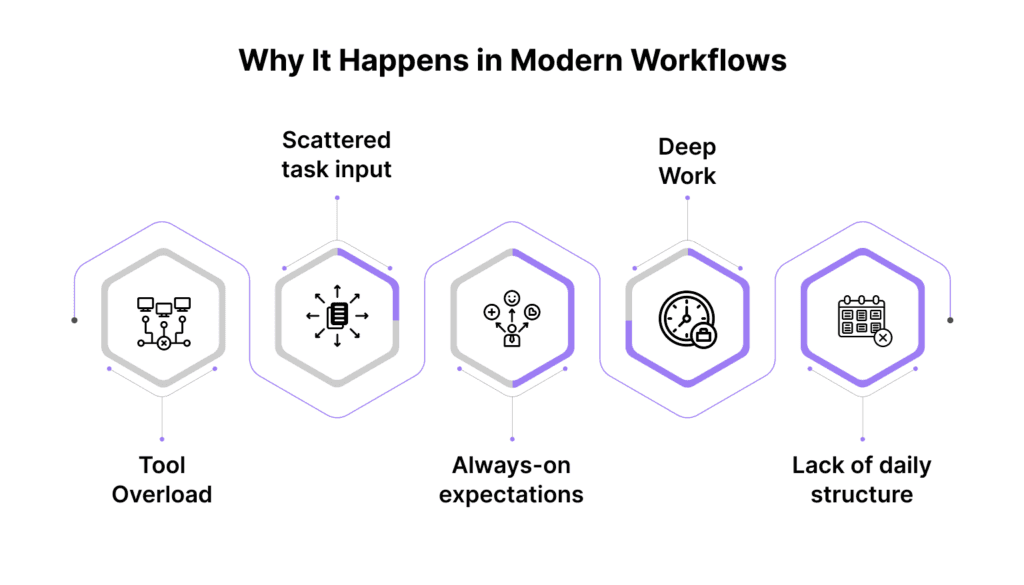
Modern work environments are filled with distractions that make focused, intentional work harder to sustain.
Too many disconnected tools: Juggling separate platforms for email, chat, tasks, and calendars creates constant mental shifts.
Scattered task input: Tasks arrive from multiple places with no unified system to capture or organize them.
Always-on expectations: The pressure to respond immediately leads to frequent interruptions.
No time blocked for deep work: Calendars fill with meetings, leaving little protected time for focused tasks.
Lack of daily structure: Without a clear plan, the day is driven by the most recent request, not the most important work.
Before you can focus better, you need to create the right conditions. That means being intentional about how you manage your time, tools, and attention.
6 Practical Ways to Reduce Context Switching
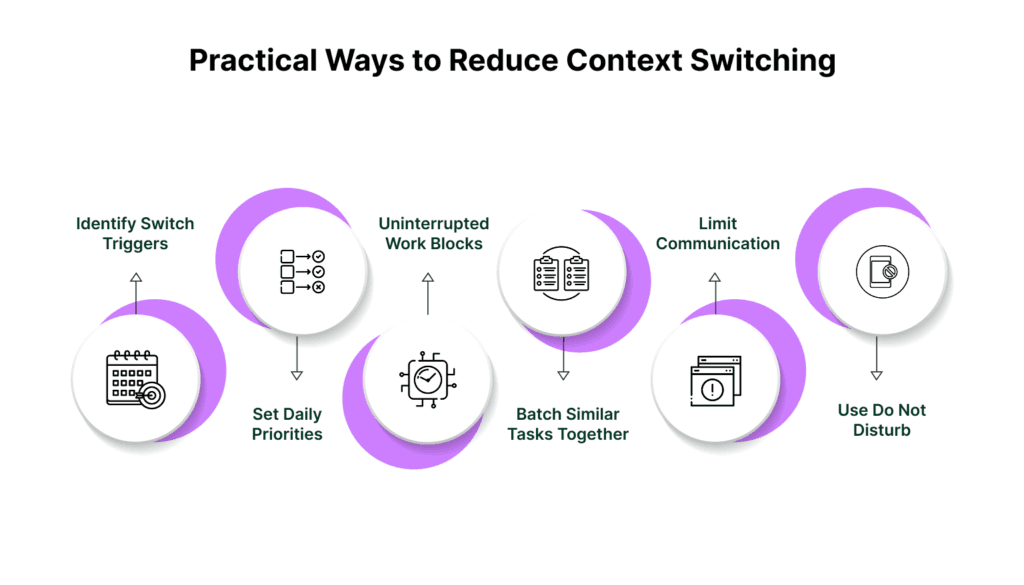
You don’t need a complete overhaul to regain control of your attention. Small, intentional changes in how you plan, prioritize, and respond to your day can make a significant difference. These are some of the most effective strategies for anyone looking to understand how to reduce context switching in a real-world work environment.
1. Identify What’s Triggering the Switches
Before you can reduce context switching, you need to see where and when it happens.
Notice what breaks your focus during the day, whether it’s Slack, meetings, or your own habits
Distinguish between passive switches (notifications, requests) and active ones (task hopping, tab surfing)
Keep a quick log of interruptions for a day or two to spot patterns
Once you’re aware of the triggers, you’re in a better position to reduce or avoid them
2. Set Clear Priorities Before the Day Begins
Without a clear sense of priority, the day gets filled with whatever grabs your attention first.
Spend a few minutes each morning listing your top three priorities
Use a simple system like the Eisenhower Matrix to separate what’s urgent from what’s just loud
Decide what can wait or be delegated, instead of treating everything as equally important
When distractions hit, a written plan gives you something solid to return to
Need help deciding what to focus on first? Check out our guide to setting daily priorities that actually stick.
3. Block Time for Deep, Uninterrupted Work
If you don’t protect time for focused work, it gets eaten by meetings and quick tasks.
Add blocks of time on your calendar specifically for high-focus work
Label these blocks by task so you know exactly what you’re working on
Treat them like meetings: show up, don’t skip, and don’t double-book
Silence notifications and make it clear to others you’re not available during these windows
Want to get better at time blocking? Here’s our complete guide to using time blocking for more productive workdays.
4. Batch Similar Tasks Together
Switching between unrelated tasks makes it harder to stay in the right mindset.
Group tasks that use the same part of your brain or toolset
Handle all communication (Slack, email, messages) in a single session
Break down complex projects into phases and tackle similar steps together
Staying in one workflow reduces cognitive load and helps you build momentum
5. Limit Communication Windows
Checking messages every few minutes feels productive, but it fragments your entire day.
Set specific times to check your inbox and messaging apps (e.g. mid-morning, post-lunch)
Keep those sessions short and focused, instead of letting them bleed into your work time
Turn off alerts outside of those windows so you aren’t constantly pulled away
Let your team know when to expect replies so you’re not pressured to respond immediately
6. Use Do Not Disturb and Status Tools
Interruptions are often optional, especially when they’re digital.
Enable Do Not Disturb during deep work sessions to cut distractions
Use status features in tools like Slack or Teams to indicate when you’re unavailable
Sync your status with your calendar so people know not to expect a quick reply
Setting these boundaries makes it easier to stay focused without needing to explain yourself repeatedly
Once you’ve built the right habits, the next step is reinforcing them with the right tools. Your systems should support your focus and not constantly compete for it.
Tools That Help You Stay on Track
The tools you use every day have a direct impact on how often you switch contexts. When those tools are designed with clarity and structure in mind, it’s easier to stay focused, organized, and in control of your workflow.
Here are some types of tools that can reduce friction and help you stay aligned with your priorities:
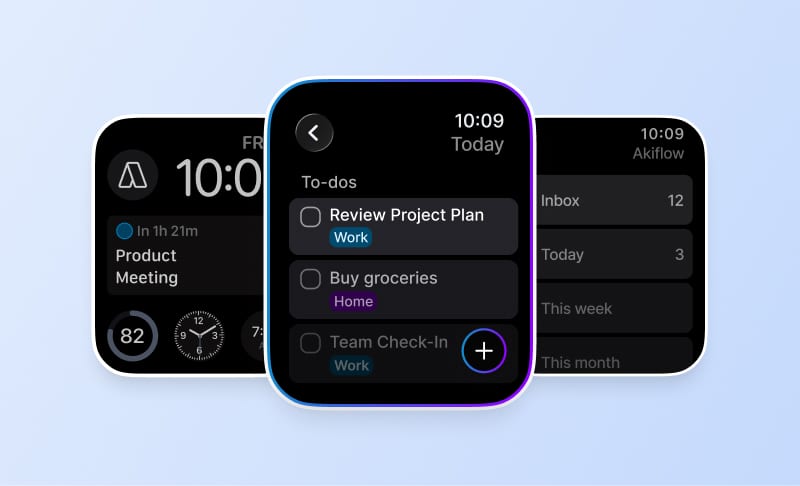
Task and calendar integration tools: Apps like Akiflow, Sunsama, and Reclaim allow you to see your tasks and schedule in one place. This makes it easier to turn priorities into time blocks without bouncing between apps.
Distraction blockers: Tools like Freedom, Cold Turkey assist in minimizing digital noise by limiting access to distracting websites and apps during focus time.
Smart communication settings: Platforms like Slack and Microsoft Teams let you set Do Not Disturb modes or sync your status with your calendar, so your focus sessions aren’t interrupted by constant pings.
Unified task management systems: Tools such as Todoist, ClickUp, or Notion help centralize tasks across different projects, reducing the need to manage multiple to-do lists across platforms.
Automated scheduling assistants: Services like Motion or Reclaim auto-schedule your tasks based on your availability, helping you protect deep work time while still staying flexible.
The key isn’t using more tools, but choosing ones that reduce noise and help you stay in one mental space for longer.
Final Thoughts
Context switching may be part of modern work, but it does not have to control your day. With a few smart habits and the right tools, you can create an environment where focus is easier to access and harder to lose.
Start by noticing what pulls your attention, then build simple systems to protect your time. Whether you block off deep work hours, set boundaries on communication, or use tools that help you stay centered, the goal is the same: fewer distractions, more clarity, and a workday that feels productive.
Small changes in how you manage your attention can lead to big improvements in how your day flows.
Try Akiflow for free and start building a schedule that protects your focus.
Frequently Asked Questions
How can you identify what triggers context switching?
Keep a quick interruption log for a day or two. Note whether a switch came from an incoming notification or request, or from your own task hopping and tab surfing. Look for repeated patterns across messages, meetings and habits before deciding which part of the day needs a different arrangement.
What gives you a clear task to return to after an interruption?
Write down your top three priorities at the start of the day. Decide what can wait or be delegated instead of giving every request equal priority. When an interruption ends, the written plan gives you a concrete point of return rather than leaving you to choose your next task from scratch.
How should a focus block appear on your calendar?
Reserve a block specifically for high-focus work and label it with the task you intend to do. Treat that appointment like a meeting by avoiding double-booking or skipping it. Silence notifications during the block and let other people know you are unavailable, so the calendar reservation has a clear practical boundary.
Which tasks make sense to batch together?
Group tasks that use similar tools or involve similar steps. Communication is one example: email, messages and other replies can share a dedicated session. For a larger project, separate it into phases and tackle related steps together, rather than repeatedly jumping between unrelated activities throughout the day.
How can you set expectations around slower replies?
Choose specific times to check your inbox and messaging apps, such as mid-morning and after lunch. Keep those sessions bounded and turn off alerts outside them. Tell your team when to expect replies so your communication routine is visible, rather than leaving others to assume that every message receives an immediate response.