Summary
Turn a broad goal into a measurable outcome, a deadline, milestones and concrete tasks; then decide when those tasks will fit into your working week.
A usable goal is specific, measurable, achievable, relevant, and time-bound, then broken into smaller milestones and daily tasks so progress stays visible.
Consistent execution comes from time blocking, turning milestones into small tasks, automating or delegating routine work, and using weekly reviews plus recalibration after completion.
In the pursuit of professional success, high ambition often fails when goals are not translated into a clear, actionable list of tasks. In today’s fast-paced world, staying busy isn’t the same as making progress.
For many professionals, goals get lost because there is no clear process for creating an effective list of tasks to accomplish them. It’s not a lack of motivation, but rather the difficulty of turning big ideas into concrete action that causes this setback.
To get back on track, it’s essential to shift from reacting to being more intentional in how you plan your work. This article offers a clear, practical framework with seven steps to help turn your goals into real, measurable progress.
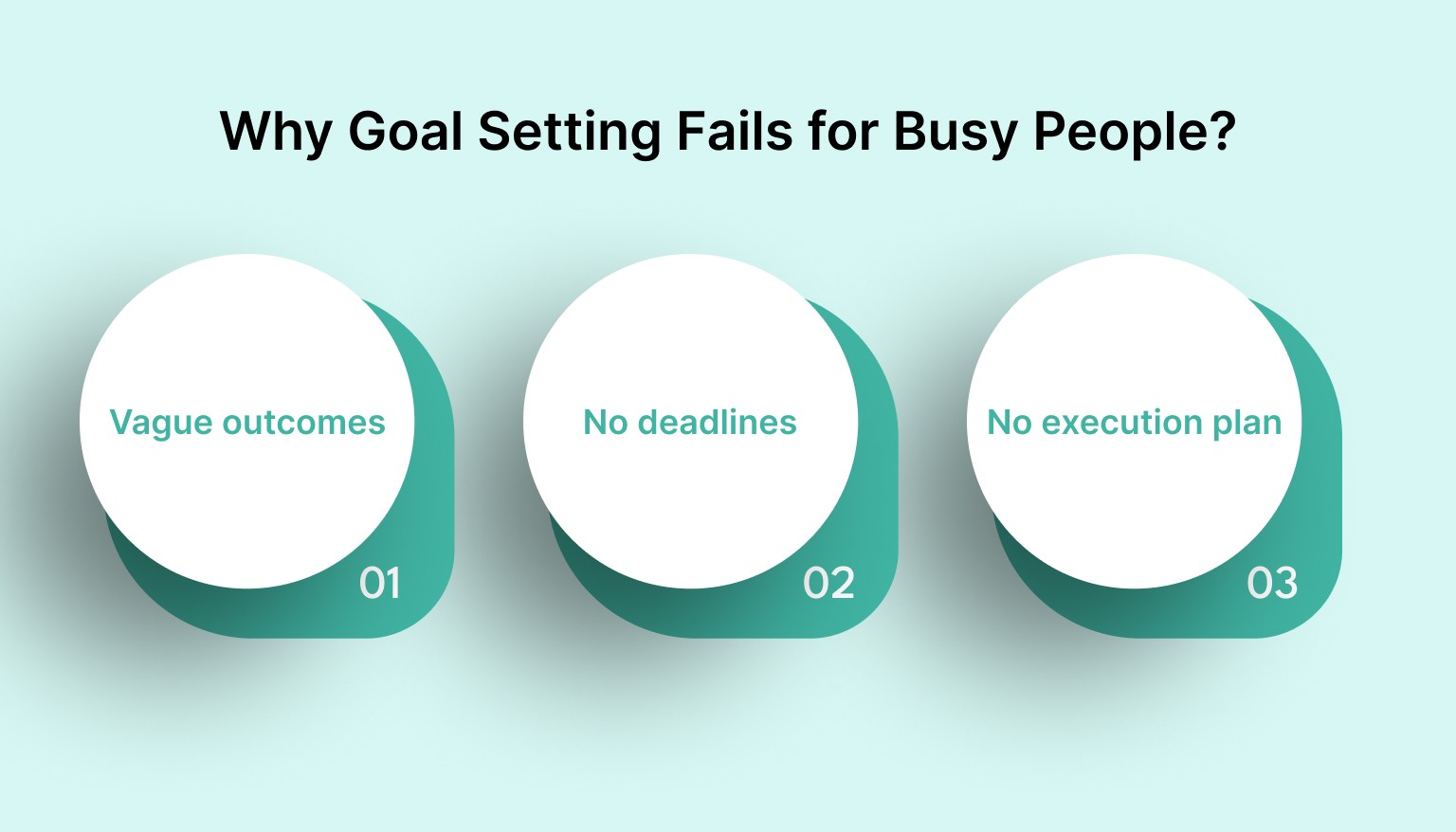
Why Goal Setting Fails for Busy People?
Most goals fail not because people lack motivation, but because daily work quickly takes over. Busy professionals juggle meetings, messages, deadlines, and unexpected tasks, leaving little mental space for long-term planning. Goals often remain ideas rather than actions because they are not converted into an effective list of tasks that are scheduled and reviewed consistently. Without structure, even important goals get pushed aside by urgent work.
Common reasons goal setting breaks down include:
Vague outcomes: Goals like “get better at work” or “grow the business” lack clarity and direction.
No deadlines: Without a timeframe, goals lose urgency and are easy to postpone.
No execution plan: When goals are not broken into tasks, there is nothing concrete to work on daily.
When tasks and calendars live separately, it becomes difficult to follow a consistent execution plan. When they live together, goals turn into visible, scheduled work.
Also Read: Calendar Management Tools vs Virtual Assistant: Which One Works Better?
What Makes a Good Goal?
A well-defined goal gives your effort direction and prevents wasted time. When goals are unclear, it becomes difficult to decide what deserves attention and what can wait. This is why effective goal achievement starts with structure, specifically, a clear process for turning goals into executable tasks.
One widely used framework is SMART, which helps transform abstract ideas into actionable plans:
Specific (clearly defined outcome)
Measurable (progress can be tracked with numbers or criteria)
Achievable (realistic within available time and resources)
Relevant (aligned with your priorities and long-term objectives)
Time-bound (attached to a clear deadline)
For example, “increase revenue” is vague, while “increase monthly revenue by 15 per cent within three months” gives clarity and focus. Even a SMART goal fails without an effective task list that defines what needs to be done each day to reach it
SMART goals make planning easier because they define both the destination and the limits. However, large or ambitious goals can still feel overwhelming if treated as a single task. Breaking them into smaller milestones helps maintain momentum, provides frequent feedback, and makes progress visible. When each milestone has its own deadline and action steps, your goals move from intention to execution.
The 7 Step Framework to Achieve Your Goals
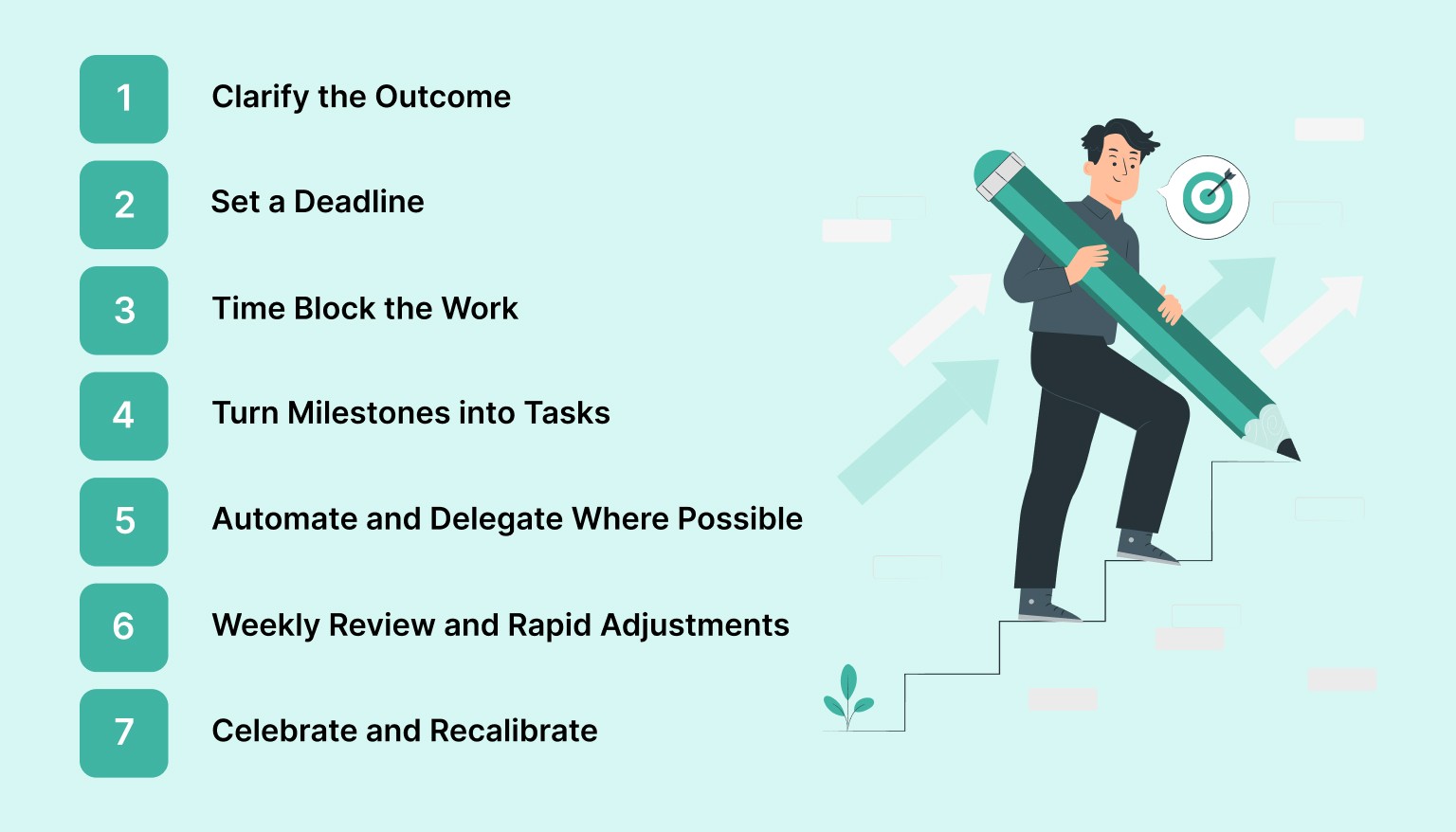
Achieving meaningful goals requires more than motivation. It demands clarity, structure, and consistent execution. The following seven-step framework breaks goal setting into simple, practical actions you can apply immediately. Each step builds on the previous one, helping you move from intention to measurable progress without overwhelm.
Let’s break goal achievement into seven clear, repeatable steps you can follow from planning to completion:
Step 1: Clarify the Outcome
Every goal must start with absolute clarity. If you cannot describe the result in one sentence, the goal is not ready yet. Clear outcomes remove confusion and help you recognize progress when it happens. Instead of focusing on effort, define exactly what success looks like and how you will know you have achieved it.
When outcomes are vague, your brain treats the goal as optional. Clear outcomes make it easier to design an effective list of tasks that directly support the goal.
Micro-actions you can do now:
Write your goal in one sentence starting with “I will achieve…”
Add one measurable indicator that proves completion.
Step 2: Set a Deadline and Intermediate Milestones
Goals without deadlines rarely move forward. A deadline creates urgency and turns intention into responsibility. However, relying only on a final deadline can feel overwhelming, especially for large goals.
Breaking your goal into smaller milestones makes it easier to convert each phase into concrete, time-bound tasks. Each milestone becomes a checkpoint that shows progress and keeps motivation steady. It also helps you detect problems early instead of discovering them too late.
Micro-actions you can do now:
Choose one realistic final deadline.
Divide the goal into three to five milestone dates.
Step 3: Time Block the Work
Goals are achieved through time, not intention. If your calendar has no space for goal-related work, progress will not happen consistently. Time blocking means assigning specific calendar slots to the tasks that move your goal forward.
This technique protects important work from meetings, notifications, and reactive tasks. Seeing your goal scheduled builds accountability and reduces decision fatigue during the week.
Micro-actions you can do now:
Block two recurring focus sessions each week.
Treat these time blocks as non-negotiable appointments.
Stop letting your goals compete with your calendar. Transforming intentions into actions is easier when your tasks and schedule live in one place. A system like Akiflow helps convert milestones and tasks directly into time blocks, reducing friction between planning and execution.
Step 4: Turn Milestones into Tasks
Milestones show direction, but tasks create action. Each milestone should translate into a clear, effective list of executable tasks that can be completed in one sitting. When tasks are too large, procrastination increases.
Breaking milestones into smaller steps makes progress visible and reduces mental resistance. It also helps you plan realistically instead of underestimating the effort required.
Micro-actions you can do now:
Convert each milestone into three or fewer concrete tasks.
Assign a priority level to every task.
Step 5: Automate and Delegate Where Possible
Not all work requires your direct involvement. Repetitive tasks drain time and attention that could be spent on high-impact actions. Automation and delegation free mental energy and increase consistency.
Even small systems can create meaningful gains. Removing friction allows you to focus on decision-making, creativity, and execution rather than routine maintenance.
Micro-actions you can do now:
Identify one recurring task you can automate.
Delegate one low-impact task this week.
Step 6: Weekly Review and Rapid Adjustments
Goals drift when they are not reviewed. A short weekly review keeps your plan aligned with reality. It allows you to evaluate progress, identify obstacles, and adjust quickly.
This habit prevents small delays from turning into complete abandonment. Regular reviews also reinforce commitment and improve future planning accuracy.
Micro-actions you can do now:
Schedule a 20-minute weekly review session.
Write one improvement for the next week.
Step 7: Celebrate and Recalibrate
Completion reinforces the effectiveness of your task-planning process and prevents burnout. Recognizing progress reinforces positive behavior and prevents burnout. Celebration does not have to be large, but it should be intentional.
After finishing a goal, reassess your priorities. Some goals should be expanded, others paused, and some replaced entirely. Reflection turns experience into long-term growth.
Micro-actions you can do now:
Record one lesson learned from the process.
Decide whether to scale, repeat, or set a new goal.
Also Read: Time Blocking for Beginners: How to Master Your Schedule in 2026
Common Pitfalls and How to Avoid Them
Even well-planned goals can fail if a few common mistakes go unnoticed. Being aware of these pitfalls early makes it easier to stay consistent and protect your progress.
Avoid the following mistakes:
Scope creep (gradually expanding the goal beyond the original plan): define clear boundaries and avoid adding new objectives mid-cycle.
Overcommitting (setting too many goals at once): focus on one primary goal at a time.
Ignoring rest (working without recovery): schedule breaks and buffer time to prevent burnout.
Lack of accountability (no one tracking progress): Use weekly reviews or share goals with a trusted peer.
Inconsistent planning (reacting instead of following a plan): review and update your plan at the same time each week.
All-or-nothing thinking (abandoning goals after small setbacks): adjust the plan rather than quitting entirely.
Conclusion
Lasting success is the byproduct of structured systems, not fleeting inspiration. By following this seven-step framework, you master the process of creating an effective list of tasks that bridges the gap between ambition and daily execution. When goals are integrated directly into your schedule rather than competing with it, progress becomes a natural, measurable outcome of your professional workflow.
Mastering your time requires a unified approach to planning. Akiflow empowers you to centralize tasks and calendars, ensuring your most important objectives are always protected from the noise of a busy day. Visit Akiflow to streamline your workflow and turn your professional vision into reality.
Frequently Asked Questions
Why can goals stall during a busy week?
Meetings, messages and urgent tasks can crowd out work that has no clear place in the schedule. Check whether your goal has a defined outcome, a deadline and concrete next steps. Put time aside for those steps and review progress each week, rather than relying on a goal statement alone.
What should you define before planning a goal?
Write the intended result in one sentence, choose an indicator of progress and set a realistic deadline. Use SMART to check that the goal is specific, measurable, achievable, relevant and time-bound. Then identify milestones and tasks so the plan describes both the outcome and the work needed to reach it.
How do you break a goal into milestones and tasks?
Start with a final deadline and work backward to intermediate checkpoints. The guide suggests three to five milestones, each initially broken into a few concrete tasks that fit into one sitting. Treat those numbers as a planning starting point, then check priorities and whether the work fits your available time.
Why put goal work on a calendar as well as a task list?
A task list records what needs doing; a calendar shows when you intend to do it. Reserve recurring focus sessions for important goal-related tasks and treat them as work commitments. This makes competing demands visible and gives you specific sessions to review or adjust when the week’s plan changes.
What should a weekly goal review cover?
Compare progress with your milestones, identify obstacles and choose one improvement for the next week. The guide suggests setting aside 20 minutes for this review. After completing a goal, record what you learned and decide whether to expand it, repeat the process or pursue a different priority.